
Loading...
Serving North Richland Hills, TX and surrounding areas. (817) 479-5107
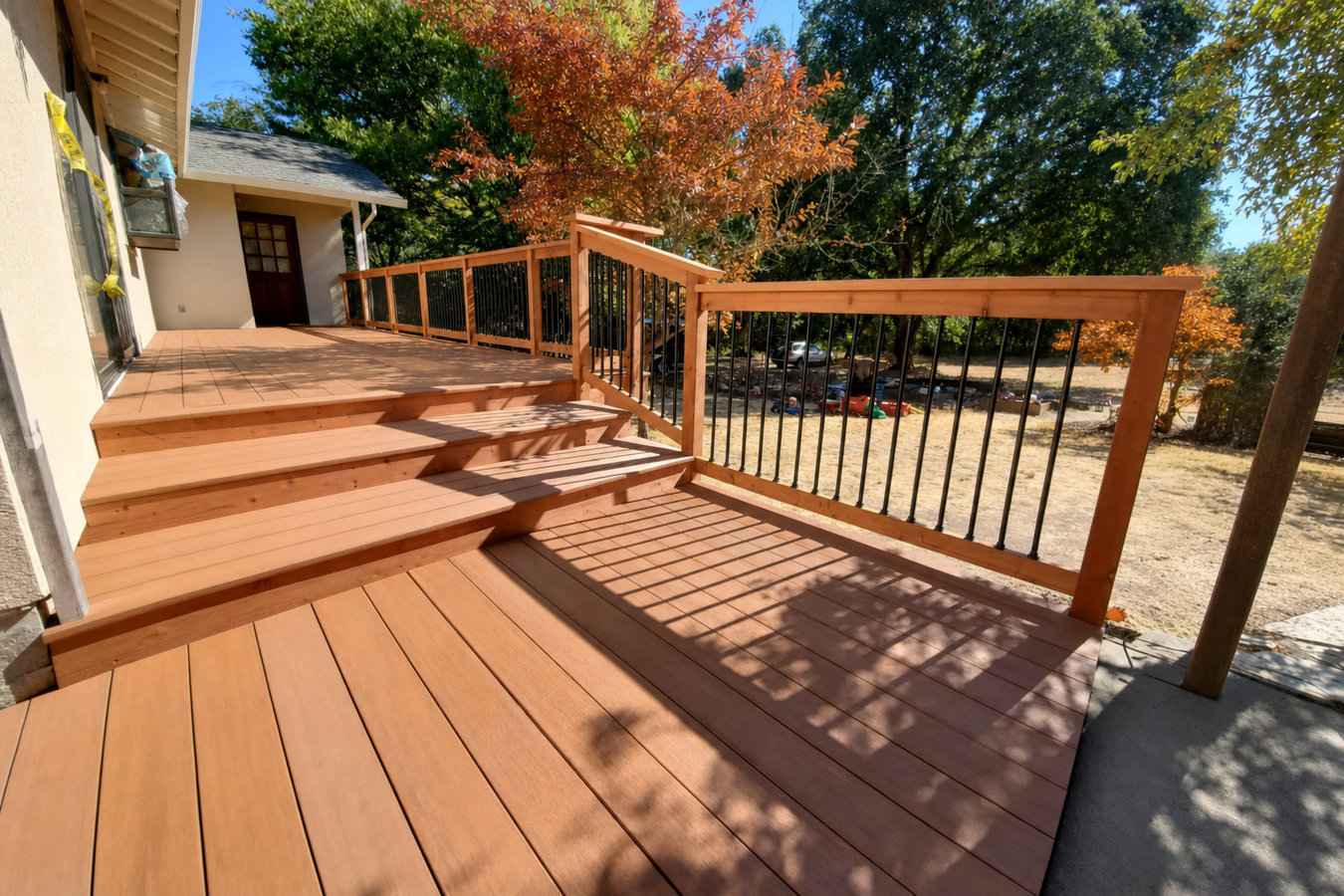
A wobbly railing is not just an eyesore - it is a safety issue. We install and replace deck railings in North Richland Hills with proper post attachment, city permits, and materials chosen for Texas heat and clay soil conditions.
Deck railing installation in North Richland Hills involves measuring and setting posts anchored to the deck frame, attaching rails and balusters to meet local safety requirements, and scheduling a city inspection to confirm the work is complete - most standard installs are finished in a single day, with the full two-to-four week timeline accounting for permits and inspection scheduling.
Railings are required by code once your deck surface sits 30 inches or more above the ground, and the details matter more than most homeowners realize. The posts have to be properly bolted through the deck's rim joist - not just surface-mounted on top of the boards - or they will loosen over time, especially on a deck that sits on North Texas clay soil. Material choices range from pressure-treated wood to aluminum, vinyl, or cable, each with different maintenance demands given the heat and UV exposure here. If you are also considering a full deck replacement or addition, a deck repair and replacement conversation often makes sense alongside a railing project.
The City of North Richland Hills requires a building permit for railing work, and many neighborhoods have HOA rules that affect material and color choices. We handle both before a single post goes up.
Stand at the top of your deck and push firmly outward on the railing. If it moves, shifts, or feels springy, the posts are no longer secure. This is a safety issue - not a cosmetic one - and it should be addressed before anyone leans on it. In North Richland Hills, clay soil movement is often the cause: a railing that felt solid at installation can loosen over time as footings shift with seasonal ground changes.
If railing boards are visibly cracked, have splinters that catch on clothing, or have turned a weathered gray, the wood has dried out and is breaking down. North Richland Hills summers - with regular temperatures above 100 degrees and intense UV exposure - accelerate this deterioration faster than many homeowners expect. At that stage, sealing alone will not fix it. Damaged sections need to be replaced with materials better suited to this climate.
If your deck surface is 30 inches or more above the ground and there is no railing, you are missing a required safety feature - and you may not realize it. This is common on older North Richland Hills homes where decks were added before current requirements were in place. A quick measurement from the deck surface to the ground will tell you whether a railing is required. Addressing this before you sell matters: buyers' inspectors flag it routinely in the DFW area.
Because North Richland Hills sits on expansive clay soil, deck footings can shift after a particularly wet winter or spring. If your railing posts look like they are leaning slightly - even an inch or two - the footing beneath them may have moved. This is especially worth checking after the wet season. A contractor can assess whether the post needs to be reset or whether the railing itself needs to be replaced before it becomes a safety hazard.
Every railing project starts with how the posts are attached - through the rim joist with structural bolts, not surface-mounted on top of the decking boards. That attachment method is the difference between a railing that stays solid for years and one that loosens after a season or two, particularly on decks built on clay soil. Baluster spacing is measured and checked on every run, not just the first and last gap. Stair railings get their own profile assessment since the shape requirements differ from deck railings. We handle the full project, from permit application through city inspection, and we offer deck repair and replacement if we find structural issues during the railing assessment.
If you are building a new deck alongside the railing project, we can coordinate both phases as one build. For homeowners adding a railing to an existing custom-built deck, we match the post spacing and material to what is already there rather than treating the railing as a separate afterthought.
Best for homeowners who want a traditional wood look at a lower upfront cost and are willing to seal or stain every couple of years to maintain it in the Texas climate.
Best for homeowners who want a low-maintenance option that holds up well to North Texas heat and UV without fading, cracking, or needing annual treatment.
Best for homeowners who want a clean, consistent look with minimal upkeep - vinyl does not need sealing and wipes down easily, though it can show UV fade over time on west-facing decks.
Best for homeowners who want an open view and a modern look - requires periodic tensioning as cables stretch, but holds up well structurally in the DFW climate.
North Richland Hills sits on some of the most expansive clay soil in the country. That soil swells during wet seasons and contracts during dry ones - and North Texas delivers both extremes every year. For railing posts, this means footings and attachment points have to be designed for movement, not just for static load. A railing that passes inspection on day one can develop a lean over two or three years if the deck below it was not built to account for that ground movement. We serve homeowners across the area, including Hurst and Bedford, where the same soil and climate conditions shape every railing project.
The North Texas spring storm window - typically March through May - creates a real urgency for homeowners with railings that are already showing wear. High winds and hail during severe weather events put stress on railing posts and connections, and a railing that is borderline before a storm can fail during one. Homeowners who notice railing problems in late winter are wise to schedule repairs before that window opens, both for safety and because contractor availability tightens quickly once the storm season gets underway. The Consumer Product Safety Commission provides guidance on deck and railing safety standards that inform how we approach every installation.
We ask how big the deck is, how high off the ground, what material you are thinking about, and whether there is an existing railing. You do not need all the answers ready - just describe what you have and what is bothering you about it. We respond to all inquiries within one business day.
We measure the deck perimeter, assess the condition of the existing frame and decking boards, and check for any HOA signage or neighborhood context that might affect material choices. The visit usually takes 30 to 60 minutes. A written quote follows within a day or two, breaking down materials and labor.
Once you approve the quote, we apply for the building permit through the City of North Richland Hills. This usually takes a few business days to a couple of weeks depending on the city's workload. You do not need to do anything during this time - we handle all of it and let you know when the permit is approved and work can begin.
The crew removes old railing if present, sets new posts bolted through the rim joist, installs rails and balusters, and completes stair handrails where needed. Most standard installs finish in one day. A city inspector visits after installation to confirm the work meets safety requirements. We walk you through the finished railing before we leave.
We measure your deck, check your HOA guidelines, and give you a written quote - no obligation, no sales pitch. Spring storm season arrives fast in North Texas, so scheduling ahead keeps your family safe through the worst weather months.
(817) 479-5107We bolt posts through the rim joist of the deck frame, not surface-mount them on top of the decking boards. This is the single most important structural difference between a railing that stays solid for years and one that loosens after a season. The American Wood Council's deck construction guide outlines the attachment standards we follow on every post installation.
We apply for the building permit with the City of North Richland Hills, schedule the post-installation city inspection, and do not hand the project over until the inspector has signed off. A permitted, inspected railing is documented proof that the work meets safety standards - which matters when a buyer's inspector shows up during a future home sale.
A large share of North Richland Hills neighborhoods have HOA rules about railing materials, colors, and styles. We ask about your HOA during the estimate visit and verify what is allowed before anything is ordered. The railing you approve is the railing that gets installed - no surprises, no retrofitting to satisfy an HOA violation notice after the fact.
We match material recommendations to this area's heat, UV exposure, and clay soil movement - not just to showroom appearance or budget alone. A railing that is rated for high-UV environments and installed with proper post attachment will hold up through multiple Texas summers without you having to call us back. We explain the maintenance reality for each material option before you decide.
Every deck railing project we complete in North Richland Hills follows the same standard: correct post attachment, materials matched to local conditions, permits handled start to finish, and a final walkthrough so you understand exactly what was done and what to watch for going forward.
Build a new deck from scratch - and include the railing as part of a single coordinated project rather than adding it later.
Learn MoreIf a railing assessment reveals structural problems with the deck itself, we handle repairs and full replacements as part of the same project.
Learn MoreSpring storm season is coming - get your railing permitted, installed, and inspected before North Texas weather turns. Reach out now for a free estimate.