
Loading...
Serving North Richland Hills, TX and surrounding areas. (817) 479-5107
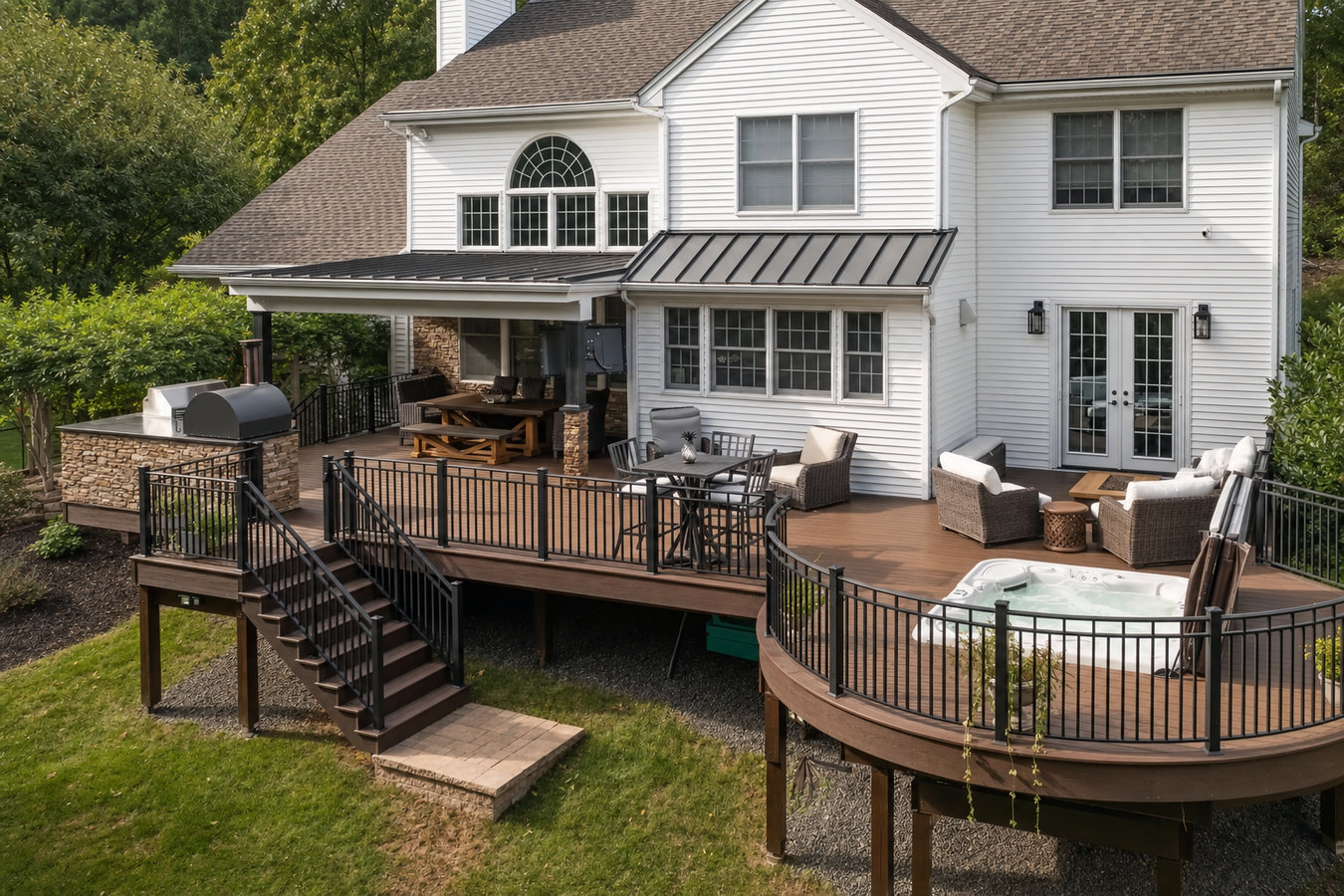
North Richland Hills Fence & Deck serves Fort Worth homeowners with custom deck designs and builds, pergola installations, pool decks, covered patio structures, and fence replacement - from mid-century neighborhoods like Wedgwood and Ridglea Hills to newer construction near Alliance. Every project we build in Fort Worth is permitted, set on footings appropriate for the local clay soil, and built with materials chosen for the North Texas climate. Call us for a free written estimate with a response within one business day.
Fort Worth has a wide range of residential property types - from narrow-lot Craftsman bungalows in Fairmount to sprawling ranch homes in Ridglea Hills - and a custom deck design has to account for the specific footprint, access, and outdoor flow of each property. A cookie-cutter deck plan that works on a suburban lot in a newer development does not translate to a 1960s home with a sloped backyard and a mature tree line. For full design options, material comparisons, and typical project timelines, see our custom deck design and build service page.
A large share of Fort Worth homes were built between the 1950s and the 1980s, and many have original or early-replacement deck structures that are now 20 to 40 years old. The clay soil movement that is constant in this part of Tarrant County gradually loosens fasteners, warps frame members, and creates the soft spots and bounce that signal a deck is past the repair-and-patch stage. We assess whether a repair is genuinely cost-effective or whether a full replacement is the better investment based on the current condition of the frame, not just the surface boards.
Fort Worth homeowners replacing aging wood decks frequently move to composite or Trex materials because the local conditions - sustained heat, spring hail, and seasonal soil movement that stresses fasteners - are hard on traditional wood. Composite boards do not require staining or sealing on the same schedule that wood demands in this climate, and impact-resistant composite surfaces hold up better through the hailstorms that move through Tarrant County most springs. The long-term maintenance savings matter for Fort Worth homeowners who have watched a wood deck deteriorate faster than expected.
Fort Worth sits at the edge of the West Texas plains and gets some of the most intense summer sun and heat of any large Texas city - average highs in July and August regularly exceed 95 to 98 degrees Fahrenheit, with regular spikes above 100. An uncovered deck or patio in Fort Worth sits unused during those peak hours. A covered structure changes that by shielding the space from direct sun and protecting outdoor furniture and deck surfaces from the spring hail events that hit Tarrant County almost every year. Covered addition permits in Fort Worth are required, and we manage that process.
Fort Worth backyards vary considerably in size and shape by neighborhood - a pergola on a mid-century ranch home in Wedgwood looks and functions differently than one on a newer property near Fossil Creek. In both cases, the footing depth and anchor design matter because the "black gumbo" clay soil under most Fort Worth properties shifts with every rain and dry cycle. A pergola set on undersized footings in this soil will lean or heave within a few years, regardless of how the visible structure looks at installation.
Fort Worth neighborhoods built in the postwar decades frequently have wood privacy fencing that is now 20 to 40 years old and leaning from repeated soil movement cycles. The clay soil in Fort Worth is particularly hard on fence posts - repeated swell and shrink cycles work posts loose even when they were set at reasonable depth. We set replacement posts deeper and use wider concrete collars than standard for this soil type, which is why our fence installations stay plumb and stable after multiple rain and dry seasons. Vinyl fencing is available for homeowners who want a solution that eliminates the post-rot issue entirely.
Fort Worth has more housing diversity than almost any other city in the Dallas-Fort Worth metro. Historic districts like Fairmount and Mistletoe Heights have Craftsman bungalows and Prairie-style homes from the early 1900s still in active residential use. Mid-century ranch neighborhoods like Wedgwood, Ridglea Hills, and Benbrook have homes built in the 1950s through 1980s that are now approaching 40 to 70 years old. Newer slab-on-grade communities near Alliance and Fossil Creek represent the other end of the spectrum - 15 to 25 years old and hitting the age where original decking, fencing, and exterior structures need attention. A contractor who works across all of these property types has to approach each one differently. The framing specifications on a Craftsman-era home are not the same as a 1970s brick ranch or a 2005 slab build.
What all Fort Worth properties share is the soil. The expansive clay that locals call "black gumbo" sits under nearly every neighborhood in the city, and it is one of the most demanding soil environments for outdoor structures in the country. It swells when Fort Worth gets its spring rains - April and May can drop several inches in a short period - and then shrinks hard during summer dry spells that push temperatures above 100 degrees Fahrenheit. That wet-dry cycle is continuous and creates constant footing pressure on any post or slab set in the ground. Spring also brings the hailstorms that Fort Worth receives almost every year - often with large hail that damages exterior surfaces and drives moisture into any split or unsealed edge on wood structures. A contractor who knows Fort Worth does not underestimate either of those factors when choosing materials and setting concrete.
Our crew works throughout Fort Worth regularly, and we understand the local conditions that affect deck builder work here. We pull permits through the Fort Worth Development Services department and are familiar with the inspection requirements the city applies to attached versus freestanding structures - an important distinction for homeowners in Fort Worth's historic districts, where overlay standards can affect exterior modifications.
Fort Worth is a large city and our work spans it broadly. We have built decks and fences in the older neighborhoods near the Fort Worth Cultural District, serviced mid-century ranch homes in Wedgwood and Ridglea Hills, and worked on newer construction near the Alliance development corridor in the north part of the city. Each neighborhood has different lot sizes, different soil drainage characteristics, and different property age profiles. The Stockyards area in north Fort Worth and the Near Southside each bring their own project characteristics - older construction methods, narrower lots, and in some cases historic overlay restrictions. We ask about the specific property during the estimate call so we come prepared for what is actually on site.
We also serve homeowners in nearby Arlington and Hurst, both of which share the same clay soil profile and climate demands as Fort Worth.
Call or submit your request online with a brief description of the project - what you want to build, approximate size, and general timing. We respond within one business day to confirm your request and schedule a site visit at a time that works for your schedule.
We measure the space, assess the soil and drainage conditions specific to your property, and discuss material options with you in person. The written estimate you receive itemizes materials, labor, permit fees, and a project timeline - no vague totals that change after you sign. Fort Worth properties often have soil and drainage nuances worth discussing before committing to a design.
We submit the permit application to Fort Worth Development Services and coordinate material delivery to arrive on or before the crew start date. You do not need to navigate the permit office or inspection scheduling - we manage that from application through final sign-off.
The crew works through the project to completion, passes the city inspection, and clears the site before walking the finished structure with you. If anything does not match the written scope exactly, we correct it before we consider the job closed.
We serve homeowners throughout Fort Worth - from the older neighborhoods near downtown to the newer communities near Alliance. Free written estimates, no obligation, and a reply within one business day.
(817) 479-5107Fort Worth is the 13th largest city in the United States, with over 900,000 residents and some of the most distinct neighborhood character in the Dallas-Fort Worth metro. It calls itself "Where the West Begins" because it sits at the geographic transition from the wooded, humid East Texas landscape to the flatter, drier western plains. The city has dozens of named neighborhoods, each with its own housing age, style, and community feel. Historic districts like Fairmount and Mistletoe Heights contain Craftsman bungalows and Colonial Revival homes from the early 1900s that are now listed with the Fort Worth Historic Preservation office. Mid-century neighborhoods like Wedgwood and Ridglea Hills are primarily 1950s-through-1980s brick ranch homes on suburban lots. Newer areas near Alliance in the north and I-35W to the south represent the latest wave of Fort Worth residential growth, with mostly slab-on-grade construction from the 2000s and 2010s.
About 55 percent of Fort Worth housing units are owner-occupied, and the city has a strong working- and middle-class homeowner base employed in aviation, healthcare, logistics, and manufacturing. Well-known landmarks include the Fort Worth Stockyards National Historic District in the north, Sundance Square at the heart of downtown, and the world-class museums of the Fort Worth Cultural District just west of downtown. The city shares the same expansive clay soil profile and spring hail exposure as its neighbors, and that shared challenge connects it to the work we do throughout the region. We also serve homeowners in Arlington and Keller, both of which border Fort Worth and share similar project conditions.
Get a one-of-a-kind deck built exactly to your vision and yard.
Learn MoreLow-maintenance composite decking that looks great for decades.
Learn MoreAffordable pressure-treated lumber decks built to last outdoors.
Learn MoreNaturally beautiful cedar decks with excellent weather resistance.
Learn MoreProtect and refresh your deck with professional staining and sealing.
Learn MoreClassic wood privacy fences for security and curb appeal.
Learn MoreEnjoy the outdoors year-round in a screened, bug-free space.
Learn MoreShade and shelter your outdoor space with a quality patio cover.
Learn MoreNorth Richland Hills Fence & Deck serves homeowners across all of Fort Worth. Call now for a free written estimate - we respond within one business day and build on a schedule that works for you.